
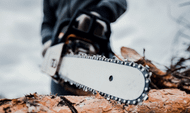
Echo chainsaws are widely recognized across the outdoor power equipment industry for their reliable engine power, lightweight ergonomics, and long-term durability. Whether you operate a compact limbing saw or a heavy timber felling unit, keeping your chainsaw cutting smoothly requires replacing the saw chain and guide bar as they wear down. However, purchasing replacement cutting attachments can quickly become confusing due to the variety of sizing standards used across different Echo models. Installing an incorrectly sized chain leads to immediate mechanical binding, severe sprocket wear, or dangerous chain derailments. To ensure you purchase the exact TriLink replacement chain for your machine, you must master measuring three key dimensions: called bar length, chain pitch, and drive link gauge. Taking a few minutes to measure your equipment accurately guarantees seamless part fitment and protects your saw drivetrain.
Understanding the Difference Between Called Length and Overall Bar Length
One of the most common errors chainsaw owners make when sourcing replacement parts is measuring the guide bar incorrectly. When a manufacturer or parts distributor refers to a 16-inch or 20-inch guide bar, they are referring to the called length, also known as the effective cutting length. This is not the total physical tip-to-tail length of the steel bar itself.
Follow these simple steps to measure your Echo guide bar length correctly:
- Place your Echo chainsaw on a clean, flat workbench with the engine turned off and the spark plug boot disconnected.
- Take a standard tape measure and place the end flush against the front plastic casing of the powerhead, where the guide bar extends outward.
- Extend the tape measure straight along the bar to the very tip of the front bar nose.
- Round your measurement to the nearest even inch to determine your called bar length.
For example, if your tape measure reads sixteen and a half inches from the front casing to the tip of the nose, your saw uses a sixteen-inch called bar length. The hidden portion of the guide bar tail that sits behind the clutch cover housing and mounts over the bar studs is excluded from this measurement. Measuring the bar from tip-to-tail while unmounted will give you a number that is two to three inches too long, leading to ordering the wrong chain length.
Calculating Chain Pitch Accurately
Chain pitch represents the drive size of the chain and determines the spacing between the drive links. For a chainsaw to operate smoothly without jamming, the pitch of the chain must match the drive sprocket on the engine shaft and the nose sprocket inside the tip of the guide bar with absolute mathematical precision.
To calculate the pitch of your saw chain manually, use this standard industry formula:
- Identify three consecutive rivets anywhere along the side of your saw chain. Rivets are the small round steel pins that hold the cutters, tie straps, and drive links together.
- Take a ruler or caliper and measure the precise distance between the center of the first rivet and the center of the third rivet.
- Divide that total measured distance by two to calculate your chain pitch.
Determining Drive Link Gauge and Drive Link Count
The third critical dimension required to select a fresh TriLink replacement chain is the drive link gauge. The gauge refers to the precise thickness of the lower drive links, which are the triangular metal teeth that extend downward from the chain into the guide bar rail groove.
Consider these key facts regarding drive link gauge and count:
- The gauge of the chain must match the width of the guide bar groove exactly; if the chain is too thick, it will not fit into the bar, and if it is too thin, it will wobble, leading to crooked cuts.
- Common Echo drive link gauge sizes include .043 inches, .050 inches, and .058 inches.
- Because measuring fractions of a millimeter with a standard ruler is difficult, using a precision digital caliper is the best way to verify gauge thickness.
- The drive link count is the total number of individual drive teeth along the inside loop of the chain.
Counting your drive links is straightforward. Remove the chain from your saw, lay it flat on a clean table, and count every single drive tooth around the interior of the loop. Combining your called bar length, verified pitch, measured gauge, and exact drive link count gives you the complete blueprint needed to order a matching TriLink replacement chain.
Locating Stamped Stencil Specifications on Echo Guide Bars
If you do not have a tape measure, digital caliper, or ruler on hand, you can often find all necessary sizing information stamped directly into the steel body of your Echo guide bar. Chainsaw manufacturers engrave these specifications near the tail of the bar so operators can identify replacement parts quickly.
Follow these steps to locate your stamped bar specs:
- Remove the two bar mounting nuts using your scrench tool and pull off the side clutch cover.
- Slip the chain off and remove the guide bar from the mounting studs.
- Wipe away all packed grease, wood dust, and bar oil from the tail section of the bar using a shop towel.
- Look closely near the mounting slot for a series of stamped numbers and code symbols.
You will typically see a series of numbers that clearly list the called bar length, the pitch in inches, the gauge in inches or millimeters, and the required drive link count. For instance, a stamp reading 18, 3/8, .050, 62DL indicates an eighteen-inch called bar length, three-eighths inch pitch, .050 inch gauge, and sixty-two drive links. Matching these stamped numbers directly to the package specifications on a new TriLink chain guarantees a precise, hassle-free installation every time.
Frequently Asked Questions
Can I change the pitch of the chain on my Echo saw without replacing other parts?
No, you cannot alter the chain pitch without changing the engine drive sprocket and the guide bar nose sprocket to match. All three components must share the exact same pitch specification to mesh together without binding.
Why is my new chain sagging beneath the guide bar even though the drive link count matches?
A new chain may sag if the bar tensioning pin is not aligned correctly inside the positioning hole on the guide bar tail, or if the drive links are not seated completely within the drive sprocket teeth. Recheck your assembly, ensure the pin is engaged, and tighten the tension screw.
What happens if I install a .050 gauge chain onto a .058 gauge guide bar?
The .050 gauge chain will fit into the wider .058 bar groove, but it will fit far too loosely. As you cut, the chain will tilt side-to-side inside the wide channel, causing severely crooked cuts, heavy bar rail wear, and increasing the risk of the chain jumping out of the bar.
Keep Your Echo Chainsaw Prepared for Every Job
Taking the time to accurately measure your Echo guide bar length, chain pitch, gauge, and drive link count is the foundation of smart chainsaw maintenance. By understanding the difference between called bar length and overall physical length, and verifying your specs via manual measurements or stamped bar markings, you eliminate sizing guesswork and protect your engine drivetrain. Equipping your saw with an exact-fit, precision-engineered TriLink replacement chain restores clean cutting action, reduces vibration, and keeps your property management tasks moving forward safely. To explore a complete inventory of commercial-grade saw chains, guide bars, and small engine accessories, visit XtremeOPE.com