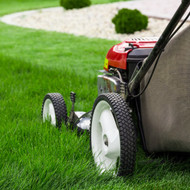
Choosing a new lawn mower blade isn’t necessarily a “one-size-fits-all” decision. There are different types of lawn mower blades that are designed to meet the needs of specific lawn conditions. If your lawn exhibits certain characteristics, you may want to give some thought about the type of lawn mower blade you purchase. Matching your blade to your type of lawn can produce better results.
Choosing the best lawn mower blade based on lawn characteristics
1) Standard Blades: When you purchase a lawn mower, it most likely comes with a standard lawn mower blade. Lawn mower manufacturers do that to reach the widest audience. As the name suggests, standard blades work fine for average lawns without any unique needs. Standard blades are a good choice for anyone who side-discharges or bags their grass clippings.
2) Medium-Lift Blades: There is a group of lawn mower blades commonly referred to as “lift blades.” Within the lift blade category, medium-lift blades are the closest to standard blades. They create a moderate amount of airflow to pull grass blades upward for cutting. This upward pull can help produce a more consistent and uniform cut. Being they fall in the middle between high and low, medium-lift blades are often considered to be general-purpose blades for most lawn-care applications.
3) High-Lift Blades: If your lawn is thick, dense and vigorous, a high-lift blade might be your best choice. These blades produce the greatest upward air lift when cutting grass. With grass blades standing tall, you’ll get the most uniform cut producing a beautifully manicured look on your lawn. High-lift blades are recommended for people who bag their clippings. You should be aware that high-lift blades require mowers with stronger, more powerful engines.
4) Low-Lift Blades: The benefits of creating an airflow to pull grass blades upwards with medium-lift and high-lift blades is well known, but sometimes that’s detrimental to your lawn. If your lawn is thin or you have bare spots, high airlift could kick up excessive amounts of dust and damage the grass you do have. For these conditions, a low-lift lawn mower blade works better because they’re more gentle on the turf. Low-lift blades are also better for lawn mowers with smaller, less powerful engines.
5) Mulching Blades: Growing in popularity, mulching blades are the choice of people who prefer not to bag or rake grass clippings. These blades have long cutting edges that chop the clippings into tiny bits that are then evenly spread over the lawn to nourish it. The clippings are so small that they are not noticeable to casual observation; but as they decompose, they release nutrients into the soil. It’s like getting a bonus, free fertilization. Mulching blades work best for lawns of average thickness.
6) Toothed Blades: If you like the idea of mulching blades, but your lawn is very thick and dense, you should choose a toothed blade. It will give you similar performance to a mulching blade but handle thick turfgrass better. Toothed blades chop up clippings into tiny bits like mulching blades, and they produce high suction similar to a high-lift blade. So you might wonder when to choose a toothed blade over a high-lift blade. Choose a toothed blade for mulching purposes and a high-lift blade when bagging clippings.
Matching your lawn mower blade to your lawn condition
If you’ve ever felt that you could grab any lawn mower blade off the shelf as a replacement, you might want to give that idea a second thought. Choosing a blade that best matches your lawn’s condition and your desired outcome requires giving your purchasing decision some thought. By doing so, you’ll achieve greater satisfaction with the final result of each and every mowing.